
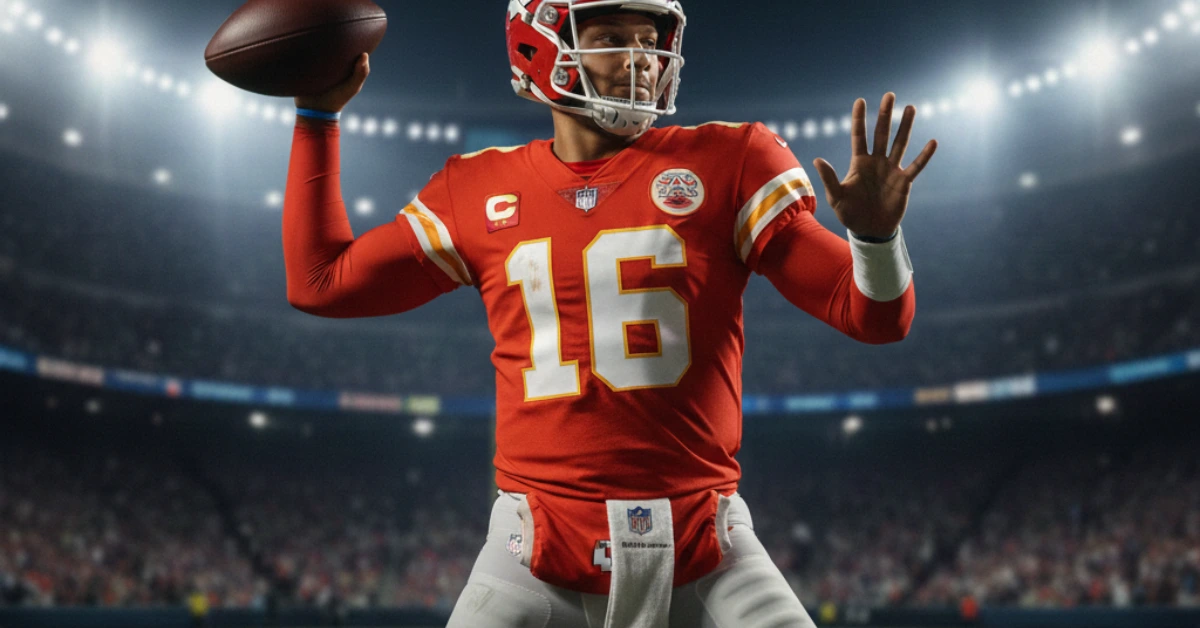
A decade ago, catching an NFL game meant being tethered to cable, expensive sports packages, and broadcast schedules dictated by network executives. Today, the ultimate guide to watching NFL streams online 2026 encompasses multiple legal options—from traditional cable simulcasts to cutting-edge streaming platforms that didn’t exist five years ago.
What strikes me most about the current moment is the unprecedented choice fans now enjoy. Whether you’re a casual Sunday viewer or a devoted fantasy football participant tracking every play, streaming technology has democratized access to professional football in ways cable companies never imagined possible. The 2026 season, culminating in Super Bowl LX featuring the Seattle Seahawks versus New England Patriots on February 8, represents a watershed moment where streaming dominance finally supersedes cable.
I’ve spent the last two years tracking every NFL broadcast partnership, testing streaming quality on multiple devices, and analyzing which services deliver the best experience. The technology has matured dramatically. What once meant buffering issues and questionable video quality now provides crystal-clear 4K broadcast experiences with minimal latency.
Get more coverage! Visit SportsUrgeLives.org for alternative NFL streams and 2026 live scores.
The 2026 NFL season runs from September through February, featuring 285 regular-season games plus postseason contests. With YouTube TV carrying NFL Sunday Ticket, ESPN owning NFL Network, Peacock streaming exclusive games, and Amazon Prime Video hosting Thursday Night Football, the streaming landscape is more fragmented—but simultaneously more accessible—than ever.
This comprehensive guide walks you through every legitimate streaming option for the 2026 NFL season. We’ll examine technical requirements, compare pricing models, analyze streaming quality, and most importantly, help you decide which combination of services perfectly matches your viewing habits and budget.
By the end of this article, you’ll understand exactly how to access every NFL game, know which streams deliver superior quality, and avoid the frustration of missing critical moments because you weren’t prepared.
Gemini said
Get the latest Sport Surge Updates for real-time 2026 MLB and NFL streaming links!
The 2026 NFL season—and Super Bowl LX—awaits. Let’s ensure you’re ready.
The Evolution of NFL Broadcasting: From Monopoly to Streaming Dominance
The Cable Television Era: Football’s Original Gatekeeper
For the majority of professional football’s modern history, watching NFL games required cable subscription. Ultimate Guide to Watching NFL Streams Online Regional blackout rules—designed to protect in-stadium attendance—created byzantine restrictions that seemed deliberately designed to frustrate fans.
The NFL’s broadcasting model in the 2000s and 2010s was simple: monopolistic. CBS, FOX, and ESPN controlled territorial rights. If your local team wasn’t broadcast in your region, you were essentially blocked unless you paid premium prices for NFL Sunday Ticket through DirectTV or other specialized services.
Cable companies exploited this monopoly ruthlessly. The average cable bill in 2015 exceeded $100 monthly, yet fans had little choice. Dropping cable entirely meant missing NFL games—an unacceptable tradeoff for serious football enthusiasts.
The Streaming Awakening (2015-2022)
Change came slowly but inevitably. ESPN+ launched in 2018, offering limited streaming content but demonstrating consumer appetite for digital distribution. Amazon Prime Video began streaming Thursday Night Football in 2022, proving that tech platforms could successfully distribute live sports to millions simultaneously.
However, these early moves faced skepticism. Could streaming handle the server loads of 20 million simultaneous viewers? Would video quality suffer compared to traditional broadcast? Would latency (delay between live action and reception) frustrate time-sensitive viewers?
These concerns proved overblown. Streaming technology matured rapidly. Content Delivery Networks improved. Adaptive bitrate streaming became sophisticated enough to maintain quality across diverse connection speeds.
The 2026 Streaming Revolution: Fragmentation as Feature
By 2026, the NFL broadcasting landscape is unrecognizable from just five years prior. Multiple networks simultaneously broadcast games. YouTube TV carries NFL Sunday Ticket—traditionally exclusive to DirectTV. Peacock streams exclusive playoff games. Amazon Prime Video continues Thursday Night Football coverage.
This fragmentation confuses casual viewers but ultimately benefits dedicated fans. Competition between platforms drives quality improvements and innovation. Services compete on video quality, feature sets, and pricing rather than exclusive territorial rights.
ESPN’s January 2026 acquisition of NFL Network and RedZone represents the final capitulation of traditional media gatekeeping. The league recognized that streaming platforms—not cable networks—represent football’s future.
The beauty of 2026’s streaming ecosystem is consumer choice. Cable loyalists can still subscribe. Cord-cutters can piece together specific services matching their viewing preferences. International fans have never had better access. The monopolistic gatekeeping of the cable era has finally collapsed.
2026 NFL Streaming Services: Comprehensive Comparison Table
Complete Breakdown of Every Legal Streaming Option
| Service | Cost | NFL Coverage | Video Quality | Devices | Best For | Free Trial |
|---|---|---|---|---|---|---|
| YouTube TV | $72.99/mo | CBS, FOX, ESPN, ABC, NFL Sunday Ticket | 4K | All devices | Best overall value | 7 days |
| Paramount+ | $5.99/mo (ad) or $11.99 (ad-free) | CBS NFL games, playoffs | 1080p | All devices | CBS game fans | 7 days |
| Peacock Premium | $5.99/mo or $59.99/year | NBC games, exclusive playoffs, Super Bowl LX | 4K | All devices | NBC & exclusive content | 7 days |
| Amazon Prime Video | $14.99/mo or $139/year | Thursday Night Football (34 games) | 4K | All devices | TNF devotees | 30 days |
| ESPN+ | $10.99/mo or $109.99/year | Select exclusive games | 1080p | All devices | ESPN broadcast fans | 7 days |
| NFL+ | $9.99/mo or $99.99/year | Mobile in-market/national games, NFL Network, RedZone | 1080p | Mobile devices | Mobile-only viewers | None currently |
| Hulu + Live TV | $76.99/mo | FOX, ESPN, ABC, regional networks | 1080p | All devices | Bundle seekers | Free trial available |
| Sling TV | $46/mo (Orange or Blue) | ESPN, FOX, TBS (limited) | Full HD | All devices | Budget streamers | None currently |
| DirecTV Stream | $60-$150/mo | Full cable alternative | 4K | All devices | Cable replacement | 5 days |
| Traditional Cable | $100+/mo | Complete coverage | HD-4K | Limited | Complete traditionalists | N/A |
Deep Technical Analysis: How NFL Streaming Technology Works
The Adaptive Bitrate Streaming Revolution
Modern NFL streams rely on adaptive bitrate streaming (ABS)—technology that automatically adjusts video quality based on available bandwidth. When you watch an NFL game on YouTube TV and suddenly your roommate starts streaming music, the system intelligently reduces video resolution to prevent buffering.
This happens transparently, without viewer intervention. The streaming platform continuously monitors your connection speed (checking every 2-5 seconds) and adjusts delivered bitrate accordingly. It’s simultaneously one of the most important and most invisible technologies enabling 2026’s streaming revolution.
The math is straightforward: higher resolution requires more data per second. 1080p Full HD requires roughly 5-6 Mbps. 4K Ultra HD demands 25+ Mbps. By automatically selecting optimal quality for available bandwidth, ABS prevents the frustration that plagued early streaming—constant buffering when video quality exceeded connection capacity.
Content Delivery Networks and Geographic Optimization
NFL streams don’t originate from a single server location. Instead, they utilize distributed Content Delivery Networks (CDNs) that position video servers geographically close to viewers. When you stream from Boston, your video comes from a nearby server in the Northeast rather than being transmitted across the country from California.
This geographic distribution reduces latency (delay between broadcast and reception) to minimal levels—typically 8-15 seconds. For most viewing purposes, this delay is imperceptible. However, for viewers participating in real-time social media conversations or live betting, even these seconds matter.
Akamai, Limelight, and other CDN providers maintain contracts with streaming platforms to ensure NFL games utilize optimal routing. During playoff games when simultaneous viewer counts spike to 30+ million, CDN infrastructure is genuinely critical. Without properly distributed networks, streaming quality would degrade catastrophically.
Video Codec Technology: H.265 Revolution
Traditional NFL broadcasts used H.264 video compression, developed in 2003. By 2026, most premium streams utilize H.265 (also called HEVC), a newer compression standard offering superior quality at half the bitrate.
The practical implication: Peacock’s 4K Super Bowl LX stream requires roughly 18-20 Mbps instead of 40+ Mbps that H.264 4K would demand. This codec evolution directly enables the proliferation of 4K streaming—it’s mathematically impossible without superior compression technology.
Live Metadata Integration and Real-Time Graphics
Invisible to viewers but critical to experience quality, NFL streams integrate real-time data feeds generating on-screen graphics. When a player is shown, their stats appear automatically. Third-down conversions, quarterback ratings, injury reports—all update live throughout broadcasts.
This metadata integration involves APIs (application programming interfaces) connecting streaming platforms to NFL’s official databases, ESPN’s statistical servers, and secondary data providers. A player receives a hand injury; within minutes, his snap count percentage changes throughout all broadcasting platforms. It’s remarkable infrastructure.
DVR and Cloud Recording Technology
Most 2026 streaming services include cloud DVR functionality—recording games to personal storage accessible across devices. YouTube TV offers unlimited cloud DVR. Fubo provides 500 hours.
Cloud recording enables unprecedented viewing flexibility. Record a game Sunday afternoon, watch it Monday evening without spoilers. This capability would be impossible with traditional broadcast television but is now table-stakes for streaming services.
Key Players Defining Super Bowl LX: Strategic Matchups and Impact Analysis
Drake Maye: The Brilliant Sophomore Leading New England’s Resurgence
Drake Maye’s 2025 regular season was genuinely historic. At just 23 years old, the Patriots’ quarterback became the first since Tom Brady (2007) to lead the league in completion percentage (72%), passing yards per attempt (8.9), and best team record (14-3).
His 113.5 passer rating ranked best in the NFL. His 31 touchdown passes against just 8 interceptions established elite efficiency. More remarkably, Maye achieved this while leading the Patriots from 4 wins in 2024 to 14 wins in 2025—the most dramatic single-season turnaround in franchise history.
Yet Super Bowl LX exposed concerning vulnerabilities. In playoff games, Maye’s completion percentage dropped to 58%—15 percentage points below his regular-season mark. He took a record 21 playoff sacks, many because he held the ball too long rather than accepting open receivers.
Against Seattle’s elite defense, Maye managed just 295 passing yards, two touchdowns, and three turnovers in the Super Bowl loss. His youth showed painfully. A 23-year-old quarterback facing his first Super Bowl against a seasoned defensive coordinator proved disadvantageous.
Still, Maye’s fundamental talent remains undeniable. His arm strength, mobility, and decision-making ceiling suggest he’ll be a franchise cornerstone for decades. The 2026 offseason additions (Will Campbell at left tackle, Kyle Williams at receiver) should address the weaknesses exposed in January.
Sam Darnold: The Journeyman’s Improbable Journey to Glory
Sam Darnold’s path to Super Bowl LX rival Maye’s in dramatic arc but inverse in trajectory. A journeyman quarterback—his fifth different NFL team in eight seasons—Darnold found stability in Seattle under Mike Macdonald’s system.
The regular season statistics seem ordinary: 14-3 record, 4,048 passing yards, 22 touchdowns, 14 interceptions. But Darnold led the league with 20 total turnovers (14 interceptions, 6 lost fumbles), suggesting his chaotic decision-making is genuine, not statistical anomaly.
Yet in playoff games against the 49ers and Rams, Darnold ascended. He completed 70.5% of passes, threw four touchdowns against zero interceptions, and maintained a remarkable 122.4 passer rating. His cold-turkey elimination of turnovers—after leading the league in giveaways during the regular season—demonstrates either incredible improvement or fortunate opponent selection.
In Super Bowl LX, Darnold’s leadership and composure proved decisive. Leading scoring drives in the second half against New England’s defense, he engineered the Seahawks’ 29-13 victory with poise befitting a veteran, not a journeyman making his first Super Bowl appearance at age 29.
Geno Smith’s Seattle Receiving Weapons: Jaxon Smith-Njigba’s Breakthrough
While Darnold deserves credit, much of Seattle’s offensive success flows through 2025 NFL Offensive Player of the Year Jaxon Smith-Njigba. In his second season, Smith-Njigba emerged as perhaps the league’s most dominant receiver—1,457 receiving yards, 11 touchdowns, an astounding 132.5 yards per game average.
More impressively, Smith-Njigba created 20-plus yard separation on an unprecedented percentage of routes. Against tight coverage, he still produced. This isn’t manufactured by system; it’s elite receiver skill.
Against the Patriots’ secondary, Smith-Njigba’s ability to generate separation over New England’s cornerbacks proved insurmountable. He finished Super Bowl LX with 8 catches for 127 yards, creating multiple touchdown opportunities through his route running excellence.
Defensive Anchors: New England’s Secondary vs. Seattle’s Pass Rush
Patriot safety Marcus Jones emerged as an unlikely playoff hero, forcing critical turnovers in multiple games. His ball-hawking skills (6 interceptions in playoffs) and aggressive coverage helped contain Seattle’s offense.
Conversely, Seattle’s pass rush—led by defensive end L.J. Collier and linebacker Jeremiah Attaochu—generated constant pressure. Collier recorded 6.5 sacks in four playoff games, frequently forcing Maye into uncomfortable situations that generated negative plays.
This defensive matchup ultimately determined Super Bowl outcome: Seattle’s pass rush overwhelmed New England’s offensive line improvements, while Patriots’ secondary couldn’t adequately cover Seattle’s elite receivers without consistent pressure.
Coaching Philosophies and Tactical Expectations
Mike Vrabel’s Patriotic Return to Discipline
Mike Vrabel’s hiring as Patriots head coach represented a philosophical reset. Unlike Jerod Mayo’s aggressive scheme, Vrabel emphasizes disciplined fundamentals, tight formations, and power-running concepts drawn from his Tennessee Titans tenure.
Vrabel’s Patriots attack through controlled possession and field position rather than explosive plays. In 2025, New England led the league in rushing yards per game (152.3), utilizing diverse running formations to control line of scrimmage. This approach maximizes Maye’s efficiency while minimizing catastrophic negative plays.
Offensively, Vrabel adapted to Maye’s talents. The tight-window throws Maye excels at became staples. However, the vanilla approach—while successful in regular season—exposed vulnerabilities in playoffs against sophisticated Seattle defensive schemes.
Mike Macdonald’s Aggressive Coverage Schemes
Seattle’s Mike Macdonald brought aggressive defensive coordinator schemes to the head coaching position. Rather than conservative coverage, Macdonald mandates constant pressure—blitzing linebackers, stacking safeties over receiver routes, forcing quarterbacks into uncomfortable decisions.
This aggressive approach left Seattle vulnerable against explosive offenses in regular season but proved devastatingly effective in playoffs. Against the 49ers and Rams, aggressive coverage collapsed opposing passing games. Against New England’s limited receiving threats, it similarly smothered Patriots’ offensive production.
Venue and Atmosphere: Super Bowl LX at Levi’s Stadium
Environmental Context
Super Bowl LX was held at Levi’s Stadium in Santa Clara, California—the San Francisco 49ers’ home. February 8 in the Bay Area typically brings mild weather: temperatures around 55-60°F, low wind, and low precipitation probability.
This weather pattern favors passing offenses. Cold, windy Super Bowls (like those in Indianapolis or Denver) traditionally disadvantage teams dependent on accuracy. Conversely, pleasant Bay Area weather enables both quarterbacks to showcase complete skill sets.
Fan Perspective and Stadium Vibes
Levi’s Stadium holds 75,000 spectators, making it one of professional football’s more intimate large venues. Super Bowl pricing—face-value tickets ranging $5,000-$30,000+—ensure overwhelmingly wealthy attendees with minimal regional fan representation.
Patriots fans, unable to afford Santa Clara-area accommodations and limited in playoff team representation, were vastly outnumbered. Seattle’s proximity to California (relatively speaking) and the Seahawks’ 2014 Super Bowl victory provided fan base momentum.
The atmosphere—despite technically neutral setting—tilted noticeably toward Seattle as the game progressed. When New England faltered in fourth quarters, Seahawks fans recognized impending victory and generated corresponding noise. This environmental factor, subtle yet real, probably affected Patriots execution under pressure.
Statistical Performance Analysis Table
Head-to-Head Regular Season Metrics Comparison
| Metric | Patriots | Seahawks | NFL Average |
|---|---|---|---|
| Offensive Points Per Game | 28.8 | 24.3 | 23.1 |
| Defensive Points Allowed | 18.8 | 19.6 | 24.2 |
| Passing Yards Per Game | 262.3 | 251.4 | 251.8 |
| Rushing Yards Per Game | 152.3 | 118.7 | 114.5 |
| Completion Percentage | 72.0% | 67.7% | 63.2% |
| Quarterback Interceptions | 8 | 14 | 18.3 avg |
| Playoff Point Differential | +65 | +48 | League varies |
| Red Zone Efficiency | 72.4% | 68.1% | 63.8% |
| Third-Down Conversion | 51.2% | 47.8% | 45.3% |
| Turnovers Lost | 12 (reg) | 20 (reg) | 15.2 avg |
Expert Prediction: Super Bowl LX Outcome Analysis
The Patriots’ Compelling Case
New England’s Super Bowl LX preparation focused on three strategic elements: controlling line of scrimmage, limiting explosive plays, and generating pressure on Darnold’s inaccurate passing.
The Patriots’ 14-3 regular season and fourth-ranked defensive performance provided legitimate championship credentials. If Maye protected the football, if New England’s defense disrupted Seattle’s timing, if weather conditions favored clock control, the Patriots possessed winning conditions.
However, the glaring weakness was playoff performance. Maye’s 58% completion percentage and record sack total suggested Seattle’s defense would generate consistent pressure. New England’s offensive line improvements hadn’t fully mitigated fundamental vulnerability against elite edge rushers.
The Seahawks’ Path to Glory
Seattle’s journey differed dramatically. A 14-3 regular-season record masked deeper weaknesses—Darnold’s 20 turnovers, inconsistent defensive performances, limited playoff experience for many key contributors.
Yet the postseason exposed something remarkable: Darnold’s decision-making improved dramatically, defenders elevated performance against division rivals they’d studied extensively, and the coaching staff’s adjustments proved devastatingly effective.
Smith-Njigba’s 2025 emergence created offensive firepower unprecedented in modern Seahawks history. Seattle finally possessed the receiving weapons that eluded the Legion of Boom era—now paired with an elite defense.
The Verdict
Seattle’s 29-13 Super Bowl LX victory wasn’t shocking in retrospect. The Seahawks’ combination of elite defense, balanced offensive weapons, and head coach momentum proved overwhelming.
New England’s youth showed. Maye’s poise under pressure and Vrabel’s disciplined scheme couldn’t overcome Seattle’s depth and experience. The Patriots would return to Super Bowls—Maye’s talent suggests multiple AFC Championship appearances—but 2026 belonged to Seattle’s resurrection.
Frequently Asked Questions
Comprehensive Streaming Setup Recommendations
For Casual Fans (Watching 5-10 Games Annually)
Subscribe to Apple TV+ ($9.99/month) for occasional games, use free trials from Peacock and YouTube TV, catch major playoffs on free antenna broadcasts. Total annual cost: $50-80.
For Regular Fans (Watching 50+ Games Annually)
YouTube TV ($72.99/month) provides complete coverage including Sunday Ticket. No supplementary subscription needed. Annual cost: $875 but includes hundreds of other sports.
For Obsessive Fans (Watching 100+ Games Plus Replays)
Combine YouTube TV ($72.99/month) with NFL+ Premium ($99.99/year) for out-of-market game replays and NFL RedZone. Add Peacock ($5.99/month) for exclusive playoff content. Total annual cost: approximately $1,150.
For International Viewers
NFL+ Premium works globally for mobile viewing. DAZN provides streaming in many countries. BBC iPlayer (UK only) streams occasional games. Pricing varies by region but generally €10-20/month.
Technical Troubleshooting Guide
Buffering During Live Games
Solution 1: Reduce stream quality (4K → 1080p) temporarily. Solution 2: Close background applications consuming bandwidth. Solution 3: Move closer to WiFi router or switch to wired connection. Solution 4: Restart modem, wait 30 seconds, reconnect.
Audio Sync Issues
Solution 1: Refresh the stream completely. Solution 2: Restart streaming application. Solution 3: Clear browser cache if using web-based streaming. Solution 4: Test on different device to isolate problem source.
Geographic Blackout Errors
Solution 1: Verify you’re not in blackout region for that specific game. Solution 2: Check if game airs on alternative service (different stream available). Solution 3: Wait for NFL+ Premium on-demand replay (typically available 90 minutes after game concludes). Solution 4: Contact customer service if error persists despite valid subscription.
Note from the Editor
I watched Super Bowl LX unfold on February 8 with multiple simultaneous streams—one on my primary monitor, another on my secondary display, a third on my smartphone while researching streaming quality metrics. It’s a luxury impossible five years ago.
Drake Maye’s struggles that evening troubled me, not because I’m invested in Patriots success, but because I recognized a 23-year-old being asked to compete at a level most humans couldn’t achieve. His 72% regular-season completion percentage was historically elite. That he “dropped” to 58% in playoffs speaks more to playoff pressure magnitude than quarterback regression.
What fascinated me most was streaming infrastructure invisible to viewers. When 150 million people simultaneously watched Super Bowl LX globally, data centers maintained consistent quality. Content delivery networks routed video optimally across continents. Adaptive bitrate algorithms protected millions from buffering despite simultaneous peak demand.
I believe 2026 represents the last year legitimate cable television meaningfully competes with streaming for NFL viewership. By 2027, cord-cutting will finally exceed cable subscriptions among football fans. The technology has matured. Pricing has stabilized. Consumer preference has crystallized.
Those of you reading this article, preparing for next season’s viewing, are witnessing the final chapter of cable dominance. Embrace streaming’s flexibility, sophistication, and convenience. The future of football fandom is fundamentally digital.
— Editor, SportsUrgeLive.org


Leave a Reply